
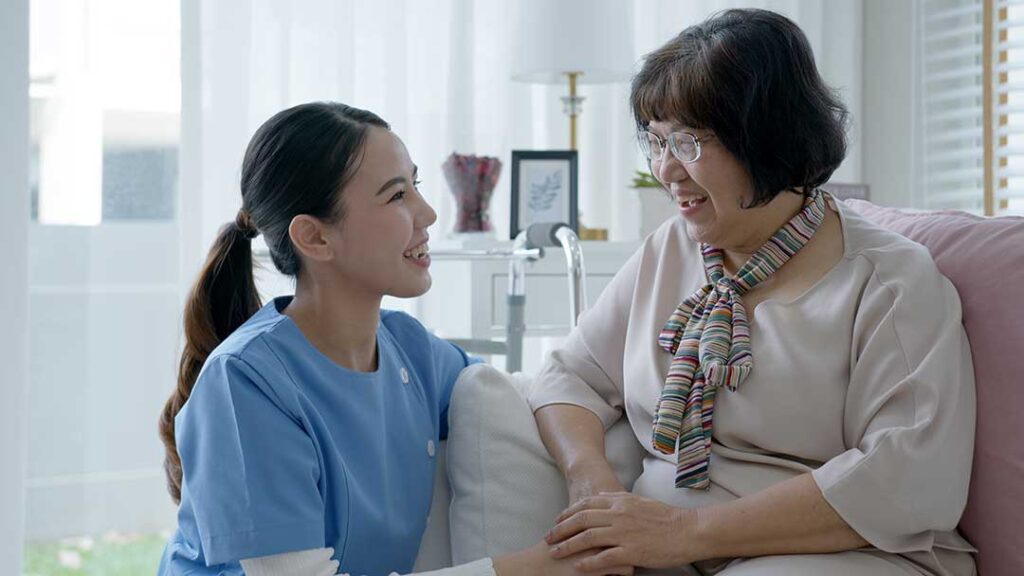
Staff-to-resident ratio is a useful phrase, but it does not tell the whole story. In Pennsylvania, assisted living residences are not governed by one simple rule such as “one caregiver for every eight residents.” Instead, staffing requirements are based on the amount and type of care residents need, the hours when support is provided, and whether staff are immediately available in the building.
Is there a required staff-to-resident ratio in Pennsylvania assisted living?
No. Pennsylvania does not set one universal staff-to-resident ratio for assisted living residences. The state’s regulatory guidance specifically explains that staffing is calculated through required direct-care service hours rather than a fixed ratio. ([pa.gov](https://www.pa.gov/content/dam/copapwp-pagov/en/dhs/documents/licensing/bhsl-licensing/documents/Assisted_Living_Residences-2800_Regulatory_Compliance_Guide_RCG.pdf?utm_source=openai))
For Pennsylvania assisted living residences, direct-care staff must be available to provide:
- At least one hour of assisted living services per day for each mobile resident.
- At least two hours of assisted living services per day for each resident with mobility needs.
- At least 75% of those required service hours during waking hours.
These are minimum service-hour standards, not a promise that one staff member will be assigned continuously to one particular group of residents. ([pacodeandbulletin.gov](https://www.pacodeandbulletin.gov/secure/pacode/data/055/chapter2800/chap2800toc.html?utm_source=openai))
A resident or family member may therefore hear a facility describe staffing as “hours per resident per day” rather than as a traditional ratio.
What does “staffing level” actually measure?
The state calculation focuses on direct-care hours that are available to assist residents. Those services may include help with activities such as bathing, dressing, walking, positioning, medication support, or other needs identified in the resident’s assessment and support plan.
For example, suppose a residence has:
- 30 mobile residents, each requiring at least one hour of assisted living services.
- 10 residents with mobility needs, each requiring at least two hours.
The minimum daily direct-care service requirement would be 50 hours: 30 hours for mobile residents plus 20 hours for residents with mobility needs. This example describes required service availability across the day. It does not mean that 50 caregivers must be present at once, nor does it show how quickly help will arrive after a call for assistance.
The number of residents served can also change from day to day. Pennsylvania’s compliance guidance considers residents who were present for all or part of the day and excludes individuals who were hospitalized or staying elsewhere during the observation period. ([pa.gov](https://www.pa.gov/content/dam/copapwp-pagov/en/dhs/documents/licensing/bhsl-licensing/documents/Assisted_Living_Residences-2800_Regulatory_Compliance_Guide_RCG.pdf?utm_source=openai))
Does someone have to be in the building overnight?
Yes. Whenever one or more residents are present, at least one direct-care staff person who is at least 21 years old must be present in the residence. The administrator may fill that role if the administrator provides direct care. ([pacodeandbulletin.gov](https://www.pacodeandbulletin.gov/secure/pacode/data/055/chapter2800/chap2800toc.html?utm_source=openai))
Direct-care staff on duty must also remain awake. This matters because overnight staffing is not designed around sleeping coverage in which residents must wait for someone to wake up before receiving assistance. ([pa.gov](https://www.pa.gov/content/dam/copapwp-pagov/en/dhs/documents/licensing/bhsl-licensing/documents/Assisted_Living_Residences-2800_Regulations.pdf?utm_source=openai))
For a residence with multiple buildings on the same premises, the direct-care staffing requirements apply to each building while residents are present. A single employee stationed in one building may not satisfy the practical need for coverage in another building. ([pa.gov](https://www.pa.gov/content/dam/copapwp-pagov/en/dhs/documents/licensing/bhsl-licensing/documents/Assisted_Living_Residences-2800_Regulations.pdf?utm_source=openai))
Why can two residences with the same number of residents need different staffing?
Resident needs can vary significantly even when occupancy is similar. A residence with 40 mostly independent residents may require a different staffing pattern than a residence with 40 people who need help transferring, use wheelchairs, have memory-related conditions, or require more frequent supervision.
Pennsylvania requires staffing to meet the needs identified in residents’ assessments and support plans. The state also describes the regulatory staffing levels as minimum requirements only. Additional staff may be needed based on resident needs, the design of the residence, the way it operates, and the services being provided. ([pa.gov](https://www.pa.gov/content/dam/copapwp-pagov/en/dhs/documents/licensing/bhsl-licensing/documents/Assisted_Living_Residences-2800_Regulations.pdf?utm_source=openai))
This is why a raw number, such as “one caregiver for every 12 residents,” can be misleading. It may not show:
- How many residents need two-person transfers.
- Whether residents are spread across several floors or buildings.
- How many people need help during morning routines.
- Whether staff are also handling meals, laundry, housekeeping, transportation, or maintenance.
- How the residence responds when several residents need assistance at the same time.
Pennsylvania’s rules specifically recognize that additional staff hours may be necessary for transportation, laundry, food service, housekeeping, and maintenance needs. ([pa.gov](https://www.pa.gov/content/dam/copapwp-pagov/en/dhs/documents/licensing/bhsl-licensing/documents/Assisted_Living_Residences-2800_Regulations.pdf?utm_source=openai))
What is the difference between staff in the building and staff available to help?
A staff member can be physically present but temporarily unavailable because that person is assisting another resident, administering medication, responding to an urgent issue, or completing another required task.

For that reason, families should ask about both staffing presence and response capacity. Useful questions include:
- How many direct-care staff are scheduled on the day, evening, and overnight shifts?
- How many staff members are assigned to each floor or building?
- How many residents does each staff member typically support?
- What happens when a staff member is helping someone else?
- How are call bells, pendants, or requests for help monitored?
- What is the usual response time during bathing, meals, bedtime, and overnight hours?
- How does staffing change when several residents need help at once?
- Are agency or substitute staff used, and how are they oriented to the residence?
The answers may provide more practical information than a single advertised ratio.
Does a nurse have to be on site?
An assisted living residence must have a licensed nurse available either in the building or on call at all times. The nurse may be an employee or under contract. The residence must also have access to a dietician for special dietary needs identified in a resident’s support plan. ([pa.gov](https://www.pa.gov/content/dam/copapwp-pagov/en/dhs/documents/licensing/bhsl-licensing/documents/Assisted_Living_Residences-2800_Regulations.pdf?utm_source=openai))
“Available on call” is not the same as “physically present on every shift.” Families should ask when a nurse is usually in the building, what issues direct-care staff can handle independently, and how urgent changes in condition are evaluated.
Assisted living residences are residential settings regulated by Pennsylvania’s Department of Human Services, while nursing homes are separate medical facilities regulated under different state and federal requirements. The two settings should not be compared using the same staffing assumptions. ([pa.gov](https://www.pa.gov/agencies/dhs/resources/aging-physical-disabilities/personal-care-homes/personal-care-home-faq?utm_source=openai))
How do local conditions affect practical staffing needs?
In Chalfont, seasonal weather can affect the daily workload even when the resident census remains unchanged. Snow, ice, heavy rain, and extreme temperatures may make walking outdoors more difficult, delay transportation, or increase the need for indoor activities and supervision.
Housing patterns and residence design also matter. A smaller setting may allow staff to see common areas more easily, while a larger residence or a campus with multiple buildings may require more time for staff to move between locations. Elevator waits, long corridors, dining-room schedules, and distance from bedrooms to common areas can all affect how quickly assistance is delivered.
These factors do not replace Pennsylvania’s staffing requirements, but they help explain why actual care capacity cannot be judged by headcount alone.
What is the most reliable way to evaluate staffing?
Look for consistency between the residence’s staffing plan and the needs of its residents. Ask to review the current license status and publicly available regulatory information through Pennsylvania’s Department of Human Services resources. The state’s provider directory can be searched by county, region, ZIP code, facility name, and licensing status. ([pa.gov](https://www.pa.gov/agencies/dhs/resources/licensing/pch-alr-licensing?utm_source=openai))
During a visit, observe whether staff appear able to respond without routinely rushing, whether residents wait a long time for assistance, and whether common areas are supervised appropriately. Speaking with current residents and families may also reveal how staffing feels during high-demand periods such as mornings, meals, evenings, and overnight hours.
The central question is not simply “How many residents does each staff member cover?” A more useful question is: Can the residence provide timely, awake, and appropriately trained support for the actual needs of the people living there, at every hour of the day?
